
SIM Binding Push Aims to Close India’s Fraud Loopholes, Industry Sees Scope for Deeper Identity Controls
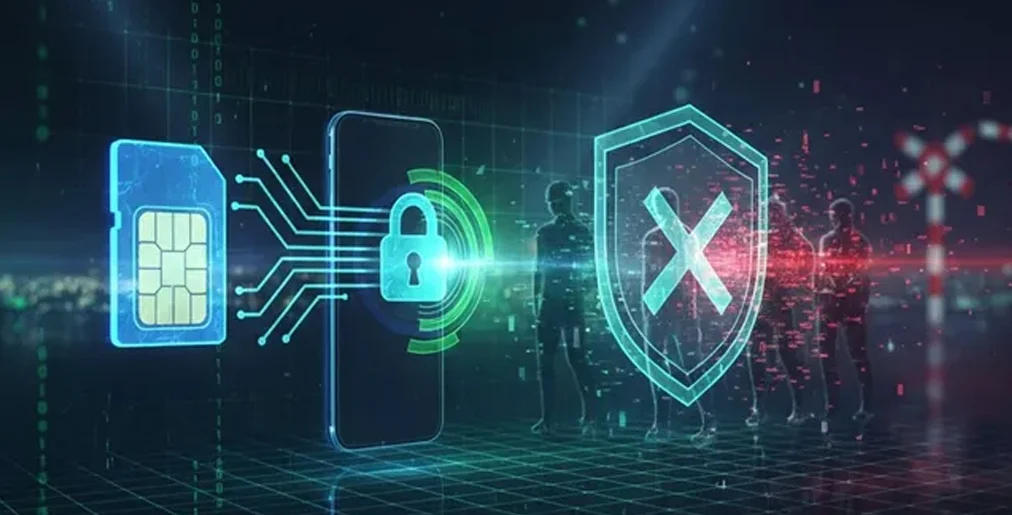
India’s move to mandate SIM binding for over-the-top (OTT) communication platforms is being positioned by the government as a key intervention to curb rising digital fraud and strengthen national security, even as technology providers argue that telecom-level verification must be complemented by stronger device and user authentication.
Union minister for communications and electronics and IT Jyotiraditya Scindia has said the SIM-binding requirement is intended to shut down a critical vulnerability that fraudsters have exploited across messaging and calling platforms. Speaking to ETTelecom, Scindia said that SIM binding ensures that the digital identity is anchored to a verified telecom identity, helping law-enforcement agencies trace misuse and prevent impersonation and cybercrime at scale.
The policy thrust comes amid a sharp increase in mobile-enabled fraud in India, including phishing attacks, “digital arrest” scams, account takeovers and impersonation attempts carried out through messaging apps. Officials have argued that while banks and financial institutions already rely on SIM-linked authentication, OTT platforms have historically operated without similar accountability, allowing bad actors to retain access even after a SIM card is removed or replaced.
Under the proposed framework, OTT platforms will be required to ensure that accounts remain actively linked to a valid SIM, with safeguards such as automatic logout from web sessions when SIMs are changed or deactivated. The government believes this will reduce anonymity and make it harder for criminals to operate across devices and jurisdictions.
However, cybersecurity experts caution that SIM binding alone may not be sufficient to deal with increasingly sophisticated fraud techniques that rely on cloned SIMs, remote access tools and synthetic identities.
According to Deepak Kumar Sahu, founder of Faceoff Technologies, SIM binding is an important first step, but its impact can be significantly strengthened by adding device-level and user-level trust signals.
Sahu argues that while SIM binding confirms that an account is linked to a verified telecom number, it does not always guarantee that the person or the physical device using that SIM is legitimate. Technologies such as encrypted QR-based verification, liveness detection, device fingerprinting and secure identity validation can help establish that the user is real and present, rather than spoofed or remotely controlled.
This layered approach, he said, is particularly effective against phishing attacks, digital arrest scams and account takeovers, where fraudsters often depend on social engineering or cloned identities to bypass basic checks. By allowing sensitive information to be accessed only on trusted devices and detecting deepfake or synthetic identities in real time, additional verification layers can stop fraud attempts at an early stage.
Sahu also pointed to the role of operator-side analytics in identifying abnormal behaviour patterns. When combined with telecom fraud detection systems and on-device protections, these measures reduce anonymity, prevent impersonation and make it significantly harder for scammers to misuse mobile communication channels.
Industry bodies have broadly welcomed the SIM-binding proposal, seeing it as a step towards a more level regulatory playing field between telecom operators and OTT platforms. Operators have long argued that while they are subject to strict know-your-customer (KYC) and security obligations, messaging apps have not faced equivalent requirements despite carrying a growing share of voice and messaging traffic.
At the same time, privacy advocates are expected to scrutinise how SIM binding is implemented, particularly around data retention, user consent and safeguards against misuse. The government has maintained that the objective is not surveillance, but accountability and traceability in cases of fraud and national security threats.
As India’s digital economy continues to expand, the success of SIM binding may ultimately depend on how effectively it is integrated with broader identity, device security and AI-driven fraud detection frameworks — turning a regulatory mandate into a genuinely resilient trust architecture.