
The Role of a Neurofeedback Technician Enhanced by FaceOff Behavioral Intelligence
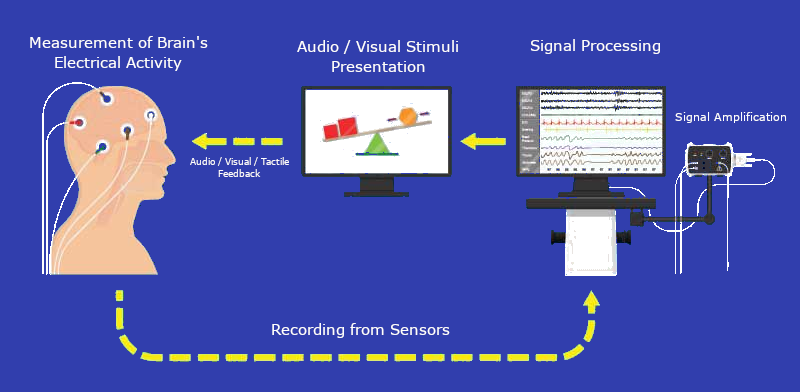
A Neurofeedback Technician plays a crucial role in helping individuals regulate and optimize brain function using non invasive brain training techniques. Working at the intersection of neuroscience technology and human performance the technician ensures that neural signals are accurately captured and translated into effective training experiences.
With the integration of FaceOff behavioral intelligence, the technician’s role expands beyond brain wave monitoring to include real time behavioral and emotional validation of neural performance, creating a more complete and measurable brain optimization process.
Core Responsibilities of a Neurofeedback Technician With FaceOff Integration
1 Brain Signal Monitoring Using EEG With Behavioral Context
Neurofeedback technicians set up EEG sensors on the scalp to measure brain wave activity such as alpha beta theta and delta waves which reflect how neurons communicate in real time.
FaceOff complements EEG monitoring by simultaneously analyzing facial emotion eye focus posture speech tone and physiological stress indicators. This provides the technician with behavioral context to EEG data helping them understand not only how the brain is firing but how those neural patterns are expressed in attention emotional stability and cognitive effort.
Impact: More accurate interpretation of training readiness and neural efficiency.
2 Conducting Neurofeedback Sessions With Real Time Human Feedback
During neurofeedback sessions technicians operate systems that deliver visual auditory or interactive feedback to reinforce healthier brain wave patterns. FaceOff adds a parallel feedback layer by monitoring emotional regulation focus stability and stress responses throughout the session.
If EEG patterns appear improved but FaceOff detects emotional strain cognitive overload or attention drift the technician can flag this to the supervising clinician for protocol refinement.
Impact: Closed loop training that ensures neuroplastic gains translate into real world performance.
3 Protocol Implementation With Behavioral Validation
Technicians implement clinician defined protocols targeting improved focus emotional regulation better sleep cognitive clarity or peak performance. With FaceOff the technician can validate whether each protocol is producing consistent behavioral improvements such as reduced anxiety improved attentional control and faster emotional recovery.
This allows protocols to be fine tuned based on objective behavioral outcomes rather than EEG data alone.
Impact: Highly personalized and outcome driven brain training programs.
4 Client Support Education and Engagement
Neurofeedback technicians guide clients through the training process ensuring comfort and understanding. FaceOff enhances this role by providing clear visual reports on behavioral progress such as improved emotional stability reduced stress response or enhanced focus over time.
This helps technicians explain progress in intuitive human terms strengthening client motivation and adherence to training programs.
Impact: Improved client trust engagement and long term participation.
5 Equipment Setup Safety and Ethical Standards With Added Assurance
Technicians remain responsible for correct sensor placement system calibration hygiene and safety compliance. FaceOff adds an additional quality assurance layer by detecting signal artifacts behavioral inconsistencies and physiological anomalies that may indicate discomfort fatigue or poor session quality.
Impact: Higher safety reliability and data integrity.
6 Data Collection Progress Tracking and Reporting
Neurofeedback technicians document EEG trends across sessions. With FaceOff they can also track longitudinal changes in emotional regulation focus endurance and stress resilience.
This multi dimensional data set supports clinicians in evaluating progress adjusting protocols and demonstrating measurable outcomes to clients or stakeholders.
Impact: Comprehensive progress tracking that connects neural data to behavioral results.
What Neurofeedback Technicians Still Do Not Do
Even with FaceOff integration technicians do not diagnose medical or psychological conditions prescribe treatments or medications or interpret EEGs clinically unless appropriately licensed. FaceOff supports insight not diagnosis and preserves professional boundaries.
Where FaceOff Enabled Neurofeedback Technicians Work
- Brain performance centers
- Neurotherapy and neuro wellness clinics
- Mental health and resilience centers
- Sports and peak performance labs
- Corporate cognitive wellness programs
Overall Impact
With FaceOff integration the Neurofeedback Technician becomes a neuro behavioral performance enabler. The technician not only helps the brain learn to self regulate but also ensures that neural improvements manifest as measurable gains in focus emotional balance cognitive endurance and resilience.
FaceOff transforms neurofeedback from a brain signal training tool into a human performance intelligence system, making neurofeedback technicians indispensable drivers of modern brain optimization and mental wellness programs.