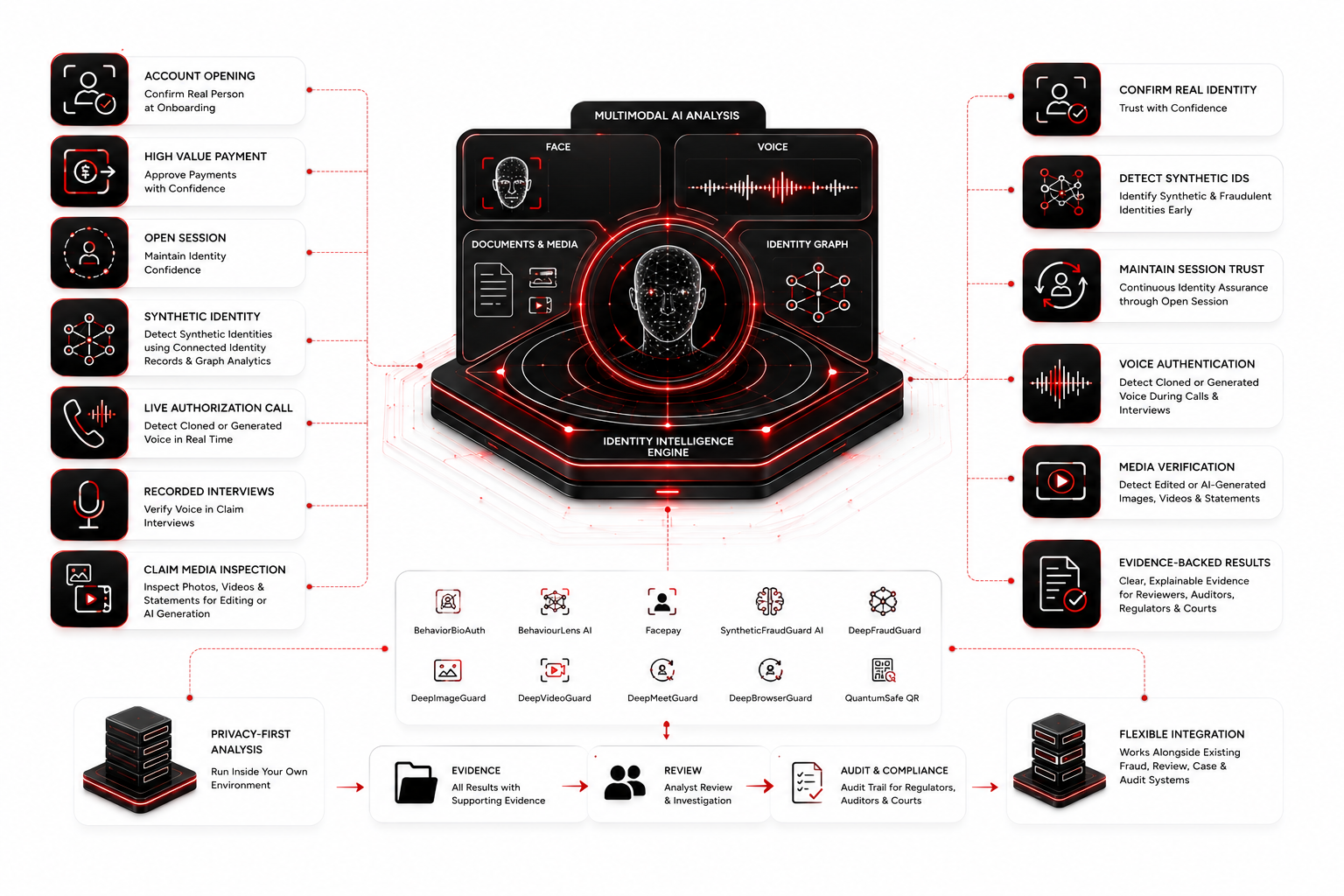
Every decision a bank or an insurer makes about a customer rests on one question: is this person who they say they are? The diagram above opens on the left with the four ways that question actually reaches you — an application assembled from identity records, a live authorisation call, a recorded claim interview, and the photographs and video attached to a claim. Nobody in the room has met the person on the other side of any of them.
The question has become harder to answer honestly. A face on a video call, a voice on a phone line and a photograph attached to a claim can all now be produced convincingly enough that looking harder does not settle it. Identity records can be assembled from real details belonging to different people, so an application passes every check it is given while the customer never existed.
All four routes meet the same place in the middle, and the products named under it are the ones banks and insurers actually deploy — each has a page on this site that describes it in the same words. Running them through one engine is what stops a bank holding four separate answers, in four formats, to what is every time the same question.
What comes back is on the right: whether a voice was spoken or generated, whether an image or a recording was edited or made, and the findings behind either. Along the foot is where that answer then goes — analysis you can run inside your own environment, evidence attached to every result, a reviewer who can act on it, and an audit trail a regulator, an auditor or a court can read. All of it arrives before an account is opened, before money moves and before a claim is settled.