
FBI's Own Employee Files Become the Target of a Major Breach
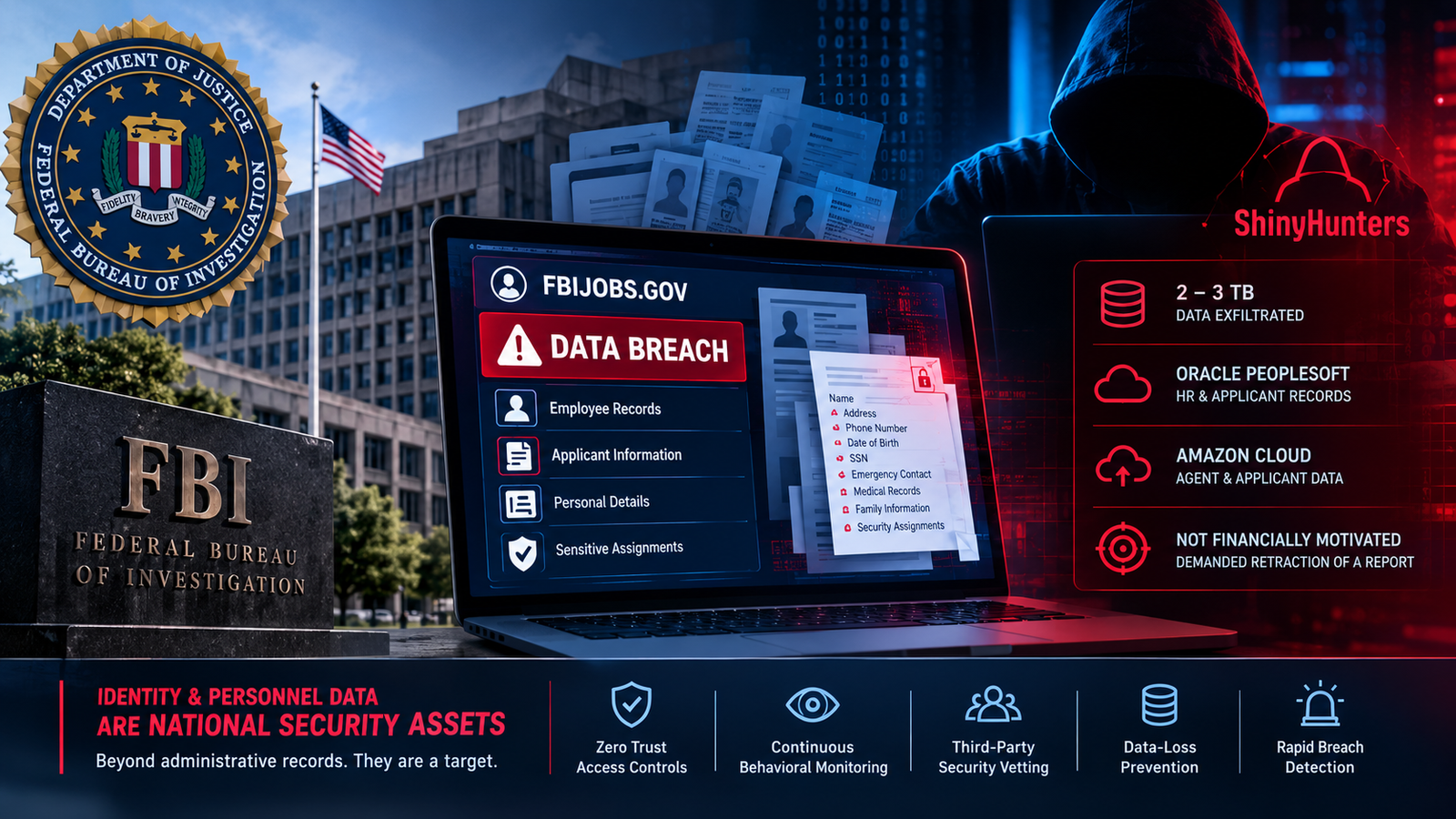
The FBI is investigating a potentially serious cybersecurity breach after the hacking group ShinyHunters claimed to have stolen highly sensitive information on thousands of bureau employees and job applicants through the FBIJobs.gov recruitment platform. The incident has raised concerns that go well beyond privacy, touching on employee safety and national security.
An internal FBI memo reportedly instructed personnel to assume information on all employees may have been compromised, even as the full scope of the theft remains under investigation. The bureau confirmed it is aware of "claims regarding unauthorized activity affecting FBIjobs.gov" and is actively investigating.
Samples reviewed by Reuters and TechCrunch reportedly included names, home addresses, phone numbers, birth dates, Social Security numbers, and emergency-contact details, in some cases extending to agents' spouses. More troubling, certain records reportedly identified assignments tied to counterintelligence, surveillance, and sensitive casework involving China, Russia, Iran and other security threats. Separate reporting indicated the stolen trove also included medical and psychiatric records, family information, and other deeply personal employee data, exactly the kind of material that could enable phishing, impersonation, harassment, or targeted coercion of personnel by hostile actors.
ShinyHunters claims to have exfiltrated between two and three terabytes of data, allegedly breaching an Oracle PeopleSoft server, commonly used to store HR and job-applicant records, before pivoting into an Amazon-hosted government cloud environment holding agent and applicant information. The FBI has said the actual point of compromise is still undetermined, including whether the intrusion originated in its own environment or through a third-party provider.
Notably, the group says the hack was "not financially motivated," instead demanding the FBI retract a published report the group claims contains false allegations against it. No consequences were specified if the demand goes unmet.
The FBIJobs portals were taken offline while investigators examine the incident, and the bureau says it is working with third-party providers supporting the recruitment platform while communicating with potentially affected personnel. This marks at least the second major FBI system compromise in 2026, following an earlier breach of systems managing wiretaps and surveillance warrants, and a separate hack of FBI Director Kash Patel's personal email by the Iran-linked group Handala.
The episode underscores a critical shift in cybersecurity thinking: identity and personnel databases are themselves national-security assets, not just administrative records. Protecting them demands Zero Trust access controls, continuous behavioral monitoring, rigorous third-party security vetting, data-loss prevention, and rapid breach detection, not perimeter defense alone.