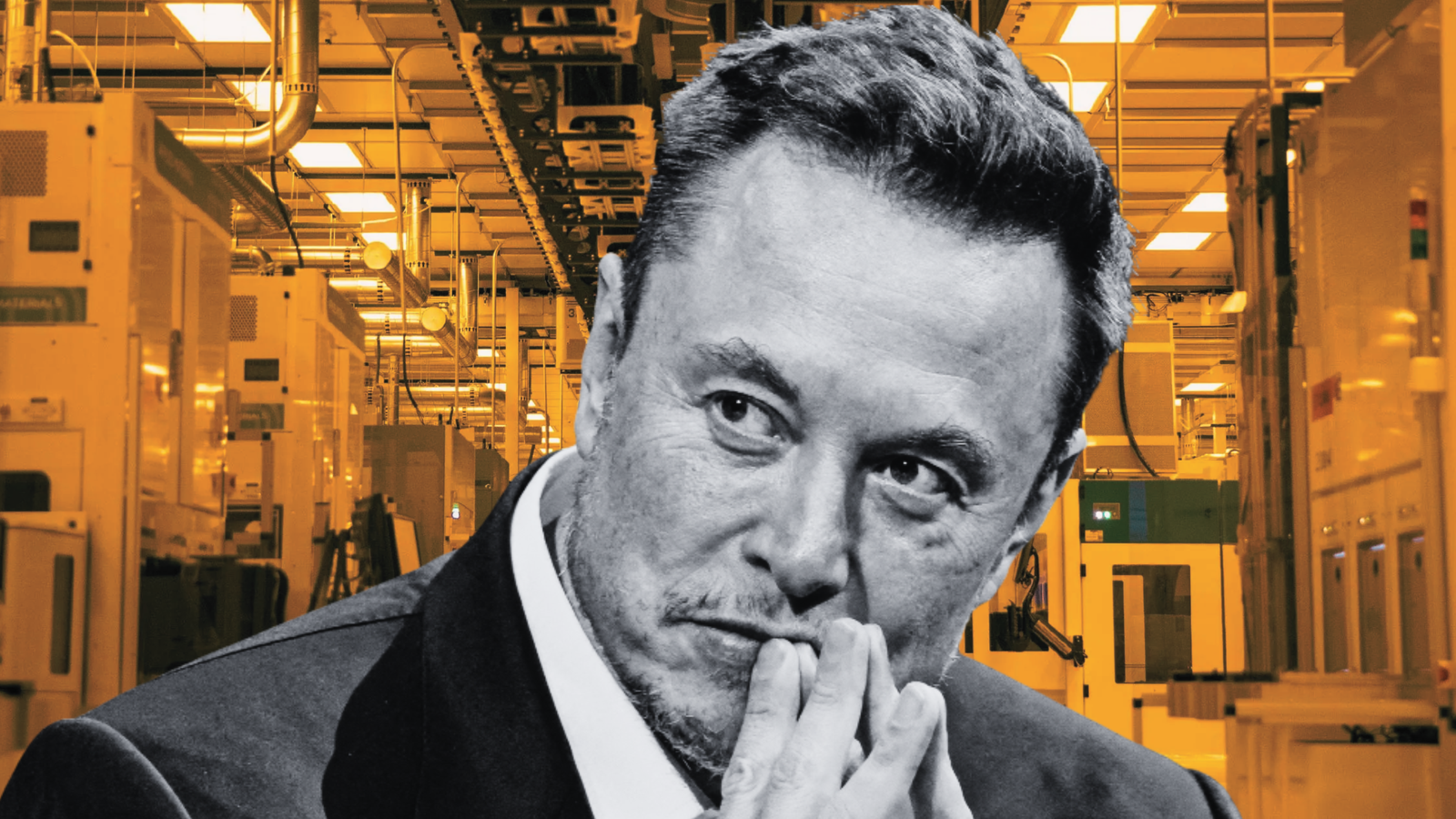
Tesla is now placing artificial intelligence chip design at the center of its long-term strategy, with CEO Elon Musk stating that in-house AI hardware has become one of the company’s most critical focus areas. The shift underscores Tesla’s ambition to tightly control the full AI stack—from data and software to silicon—especially as autonomous driving and robotics move closer to large-scale deployment.
Musk emphasized that Tesla’s future depends less on traditional automotive engineering and more on AI compute efficiency. Custom-designed chips power Tesla’s Full Self-Driving (FSD) systems, its data centers used for AI training, and the upcoming Optimus humanoid robot. By designing its own chips, Tesla aims to optimize performance, reduce dependence on external suppliers, and lower long-term costs.
Tesla has already developed multiple generations of its FSD computer, replacing off-the-shelf GPUs with specialized silicon tailored for neural network inference. The company is also scaling its Dojo supercomputer, built around Tesla’s proprietary D1 chips, designed to train massive AI models using video data collected from millions of vehicles.
The move reflects a broader industry trend, where leading AI-driven companies are shifting toward custom silicon to overcome limitations in general-purpose chips. As demand for AI compute surges and supply constraints persist, owning chip design offers strategic resilience and performance advantages.
For Tesla, AI chip leadership is not just about cars. Musk has repeatedly stated that autonomy, robotics, and real-world AI are central to Tesla’s valuation and future growth. By prioritizing AI-chip design, Tesla is signaling that it sees itself not merely as an automaker—but as a vertically integrated AI and robotics company competing at the forefront of next-generation intelligence.