Metropolitan Police is accelerating the use of live facial recognition technology across London, arguing the system has become a “groundbreaking” policing tool, even as civil liberties groups warn it risks normalising mass biometric surveillance in public spaces.
The debate has intensified following a recent High Court ruling that cleared the way for wider deployment of the technology after a legal challenge brought by campaign group Big Brother Watch failed last month.
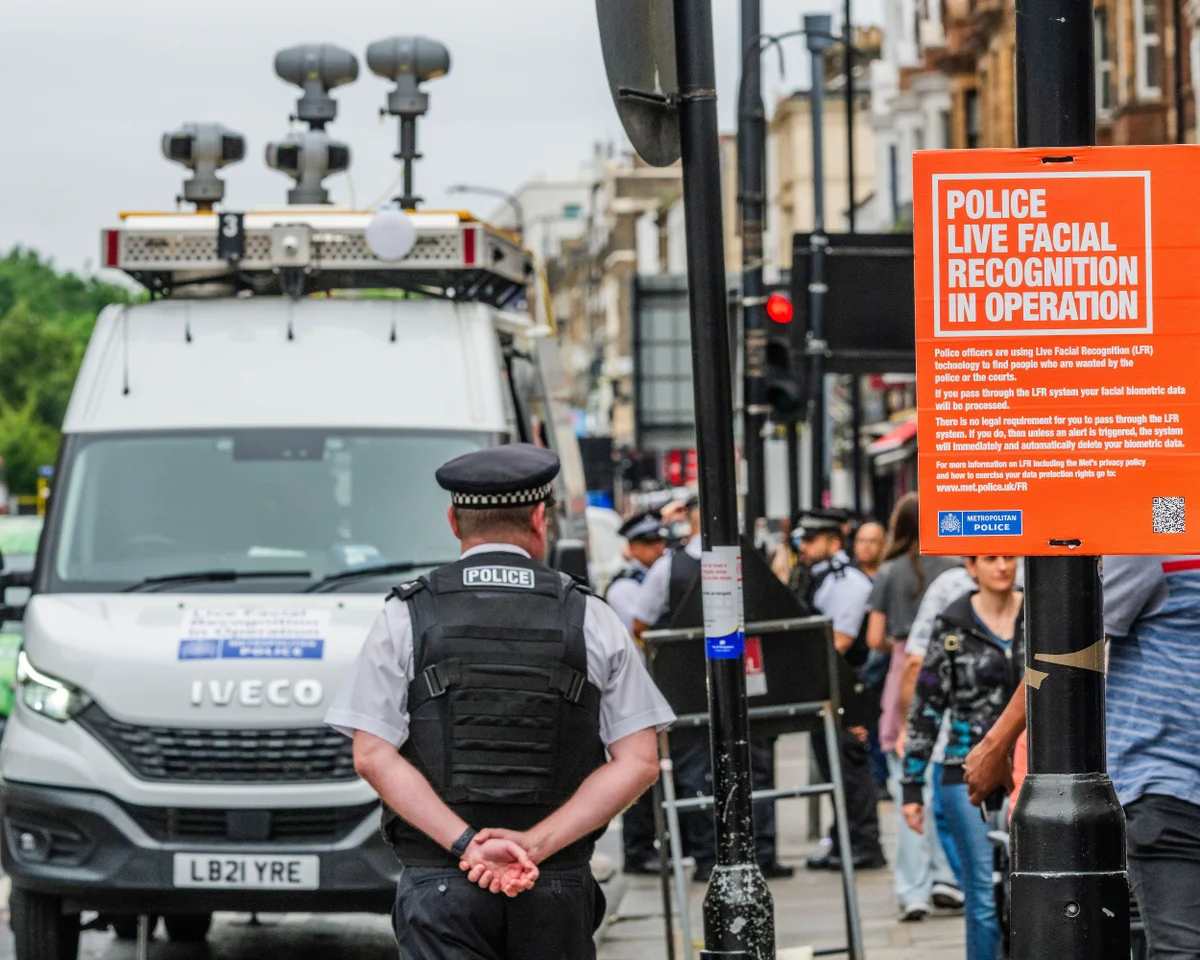
During a recent deployment in Victoria, central London, police used temporary facial recognition cameras to scan passers-by against a watchlist of roughly 17,000 individuals compiled primarily from custody images. Within a short period, officers stopped multiple individuals after the system generated alerts, including one man later taken into custody.
The Metropolitan Police says live facial recognition, or LFR, has helped officers arrest around 2,500 wanted individuals since the start of 2024, including suspects linked to violent and sexual offences.
Lindsey Chiswick, who leads the force’s live facial recognition programme, described the technology as transformative for policing in the capital. Speaking during the Victoria operation, she cited cases involving robbery, rape, strangulation and convicted sex offenders identified through the system.
The technology works by converting faces captured through live video feeds into biometric templates and comparing them in real time against police watchlists. According to the Met, non-matching facial data is deleted immediately after processing.
Police say the system has demonstrated high levels of accuracy. Chiswick said that among more than 3 million faces scanned in the 12 months through last September, the technology generated only 10 false alerts, none of which resulted in arrests.
But critics argue the core issue extends beyond technical accuracy to broader questions around civil liberties, privacy, and state surveillance.
Campaigners say live facial recognition effectively treats every member of the public as a potential suspect by subjecting large crowds to biometric screening without individualized suspicion.
The controversy escalated further after police used the technology during an anti-immigration protest in central London — reportedly the first deployment of live facial recognition at a political demonstration in the UK.
Big Brother Watch described the move as “Orwellian” and warned Britain risks becoming “a nation of suspects.”
The Metropolitan Police defended the deployment, saying it had received intelligence indicating a possible threat to public safety linked to the protest.
Britain already ranks among the world’s most heavily surveilled societies due to widespread public CCTV coverage, with Londoners potentially captured on camera hundreds of times each day. The expansion of AI-powered biometric policing now places the UK among Europe’s most aggressive adopters of live facial recognition systems.
The UK government is currently developing a broader legal framework governing facial recognition deployment, a process likely to become increasingly contentious as law enforcement agencies push for wider operational use while privacy advocates demand stricter safeguards and oversight.