
Quantum Computing Nears the Billion-Dollar Mark as Enterprises Prepare for a Post-Quantum Future
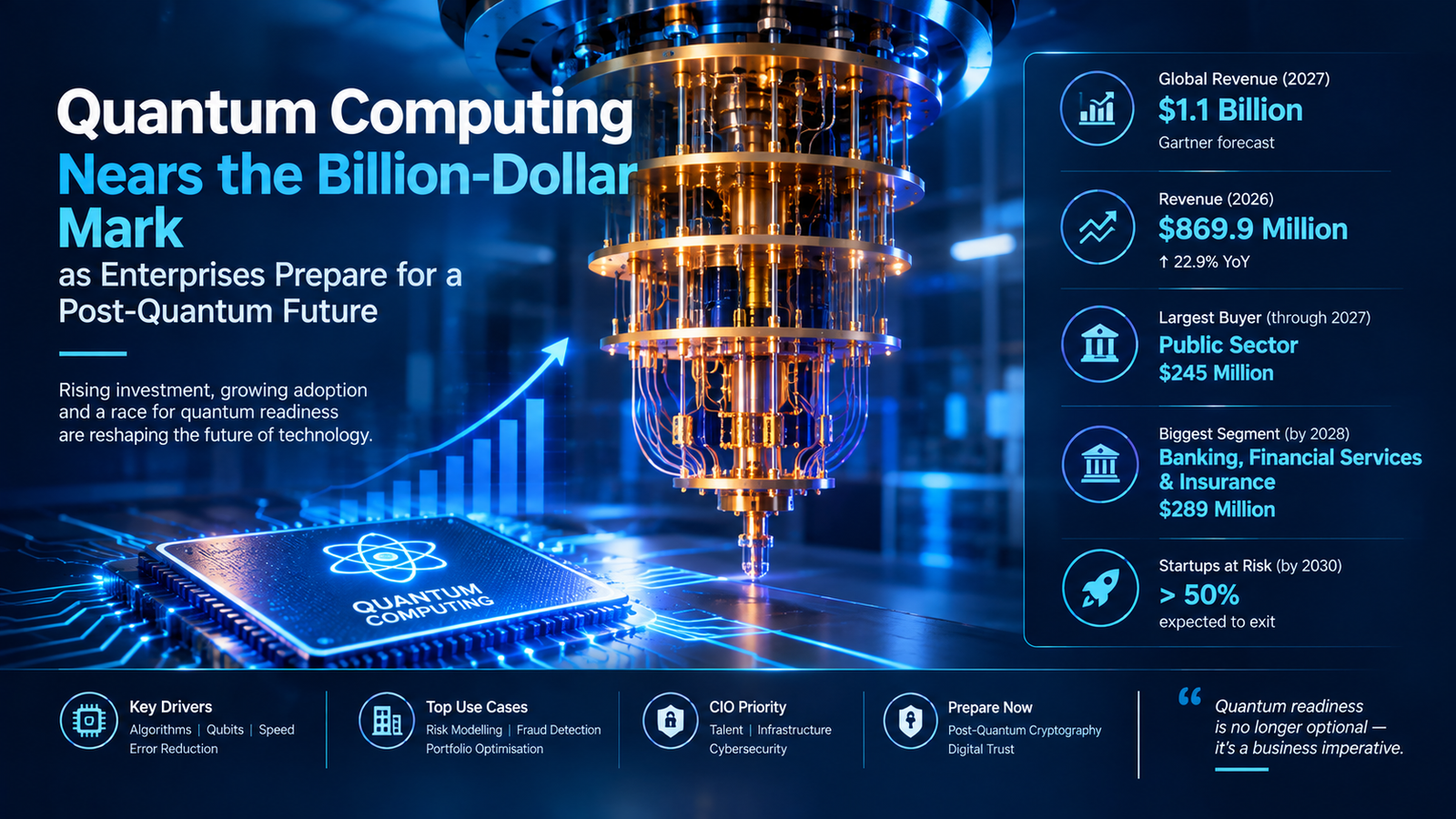
Quantum computing is entering a new growth phase. Gartner forecasts global revenue of $1.1 billion in 2027, a sign that investment in next-generation computing is accelerating.
Worldwide revenue is expected to reach $869.9 million in 2026, up 22.9% year on year. Governments and enterprises are stepping up spending on quantum research, intellectual property, strategic partnerships and early commercial use cases.
Progress in quantum algorithms, processing speed, qubit scalability and error reduction is steadily bringing practical quantum advantage closer. Still, large-scale commercial deployment faces major technological hurdles.
The public sector will remain the largest buyer of quantum computing through 2027, with projected spending of $245 million. National security, technological sovereignty and the race for research leadership are driving that spending.
By 2028, banking, financial services and insurance are expected to overtake government as the biggest spending segment, investing about $289 million. Portfolio optimisation, financial risk modelling and fraud detection are among the most promising applications.
The market is also heading for a shake-out. Gartner expects more than half of quantum computing startups to exit by 2030, as technologies that cannot reach fault-tolerant computing fail to become commercially viable.
For CIOs, quantum adoption is a multiyear journey that calls for sustained investment in talent, experimentation, infrastructure and cybersecurity. Just as important is preparing today's digital infrastructure for post-quantum cryptography, before quantum computers can break current encryption.
Indian startup FaceOff Technologies has consistently stressed the urgency of quantum-resistant security and digital trust. Gartner's latest forecast reinforces that message: quantum readiness is now a priority the industry can no longer afford to postpone.