

The pressure on Gmail's authentication model didn't build gradually it broke through in two connected moves within days of each other in July 2026, and both point to the same underlying problem: passwords and even standard multi-factor authentication are no longer holding the line against AI-accelerated attackers.
Why Gmail Felt the Heat
Passkeys became the baseline, not the upgrade. Passkeys let users sign in with a fingerprint, face scan, or screen lock, and unlike passwords, they can't be shared, copied, written down, or accidentally handed to someone else making them fundamentally more resistant to phishing. Crucially, the biometric data itself never leaves the user's device or reaches Google at all. This was Google's first major admission that passwords even paired with SMS-based two-factor codes were structurally too weak against modern phishing kits and SIM-swap attacks.
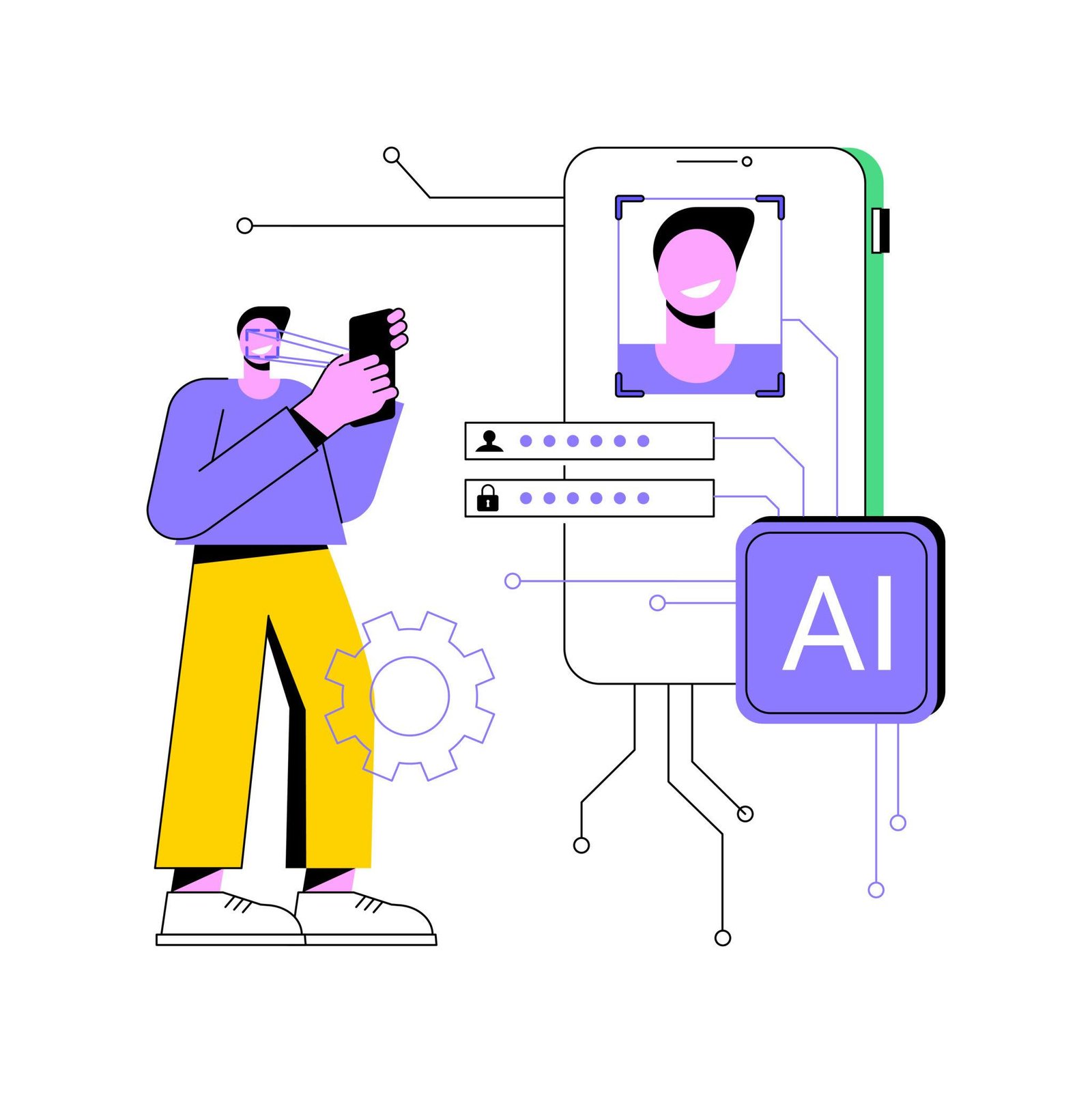
Then came the harder problem: recovery. Passkeys are device-bound, which creates an obvious gap what happens when someone loses the device holding their only passkey? Google's answer, rolled out July 23, 2026, was a new selfie-video recovery option: users pre-record a short video making guided head movements so Google can capture their face from multiple angles, and if locked out, they record a fresh video that Google compares against the original to verify it's the same person. Google paired this with additional safeguards specifically intended to prevent impersonation using photographs, prerecorded videos, and deepfakes.
That last clause is the real story. Google didn't build anti-deepfake defenses into a consumer recovery flow as a hypothetical precaution iProov's 2026 Threat Intelligence Report recorded a 741% annual rise in injection attacks, and a 1,151% surge in attacks targeting iOS devices in just the second half of 2025. Generative AI has made synthetic faces and cloned voices cheap and convincing enough that "prove you're human" has become a genuine security perimeter, not a formality.
This is precisely the environment your source material connects to Anthropic's Claude Mythos: a model capable of autonomously discovering and weaponizing zero-day flaws across every major operating system and browser without human intervention beyond an initial prompt, which Anthropic has kept restricted to a small group of critical infrastructure operators through Project Glasswing rather than releasing publicly, citing the severity of its offensive capabilities. Whether or not attackers currently have Mythos-level tooling, the broader trend it symbolizes AI compressing the time and skill needed to find and exploit weaknesses is exactly why identity-layer defenses like passkeys and biometric recovery are being pulled forward as urgent, not optional.
Absolutely Complements FaceOff Technologies' Vision
Gmail's shift validates, almost point for point, the thesis behind FaceOff's Sovereign AI platform: that static credentials passwords, OTPs, even a single biometric check are no longer sufficient once AI can convincingly fake the human on the other end.
But there's a meaningful gap between what Gmail has built and what FaceOff is built to close. Google's selfie-video feature is a point-in-time check it verifies identity once, at the moment of account recovery. It's also not a zero-knowledge design: unlike passkeys, which rely on public-key cryptography that never exposes a reversible identifier, selfie video works through biometric pattern-matching, storing a facial template that gets compared against a fresh scan and Google has said it may reuse the underlying biometric data to train its own facial recognition and age-estimation models. That's a real privacy trade-off critics have already flagged.
It verifies identity once, at the moment of account recovery. It's also not a zero-knowledge design: unlike passkeys, which rely on public-key cryptography that never exposes a reversible identifier, selfie video works through biometric pattern-matching, storing a facial template that gets compared against a fresh scan and Google has said it may reuse the underlying biometric data to train its own facial recognition and age-estimation models. That's a real privacy trade-off critics have already flagged.
FaceOff's model is different in kind, not just degree: continuous, multi-signal verification behavioral biometrics, facial micro-expressions, voice liveness, rPPG (remote photoplethysmography, detecting a real pulse), and device trust running throughout a session rather than at a single checkpoint. Where Gmail asks "is this the same face as before, right now," FaceOff's Human-in-the-Loop model asks "is this still a genuine, live human, continuously, for as long as this session lasts" closing exactly the gap a single-moment selfie check leaves open.
Where Gmail and FaceOff Could Collaborate
Here's how these two approaches could combine into a stronger, layered defense: Unable to reach visualize
The architecture above illustrates the pairing: Gmail's passkeys and one-time selfie recovery establish device and identity checkpoints, while FaceOff's continuous behavioral and deepfake analysis fills the gap between those checkpoints together forming a trust layer that doesn't break the moment a credential or a single photo is compromised.
A few concrete ways this could work in practice:
The direction is clear either way: as AI erodes the reliability of anything that can be faked, forged, or replayed, the winning security architecture is the one that verifies the human, continuously not just the credential, once.