New Delhi has momentarily become the epicentre of the global artificial intelligence debate. As the India AI Impact Summit unfolds at Bharat Mandapam, the gathering feels less like a technology exhibition and more like a strategic declaration of intent.
Unlike earlier AI summits in Bletchley Park, Seoul and Paris—where discussions largely revolved around safety frameworks and philosophical guardrails—the Delhi edition is focused on deployment at scale. The guiding motto, “Sarvajana Hitaya, Sarvajana Sukhaya” (Welfare for All, Happiness for All), underscores India’s view of AI not as elite infrastructure but as public utility.
The summit, announced by Narendra Modi at the France AI Action Summit, brings together a striking mix of Silicon Valley leaders and policymakers from more than 100 nations, including over 20 heads of government and dozens of ministers. For the first time, a major AI summit is being hosted in the Global South—symbolically shifting the centre of gravity in global tech governance.
At the heart of India’s strategy is democratized compute. Under the IndiaAI Mission, more than 34,000 GPUs have been provisioned at subsidised rates, aimed at empowering domestic startups to compete without being constrained by high infrastructure costs. The message is clear: access to AI infrastructure should not determine innovation outcomes.
The AI Impact Expo reflects this applied ambition. Demonstrations range from real-time translation tools breaking language barriers for hundreds of millions of users to sovereign large language models trained on local datasets. Agricultural AI platforms offering voice assistance in regional languages and sector-specific solutions for healthcare and governance signal a pivot from theoretical AI to problem-solving AI.
Geopolitically, India is positioning itself as a “Third Way” between the United States’ innovation-first approach and the European Union’s regulation-heavy framework. By framing discussions around “People, Planet, Progress” and focusing on safe, inclusive AI, New Delhi is advocating for scale with accountability. It argues that compute, data and foundational models should be treated as global public goods rather than concentrated assets of a few technology superpowers.
India’s Digital Public Infrastructure—built on systems such as UPI and Aadhaar—forms the backbone of this vision. The summit illustrates how AI layered over DPI can deliver governance at unprecedented scale, reinforcing India’s ambition to move from technology adopter to global rule-setter.
Yet the path ahead carries risks. While frontier AI dominates headlines, India must balance aspiration with practicality. Investments must prioritise healthcare access, climate resilience and agricultural productivity rather than chasing abstract artificial general intelligence milestones.
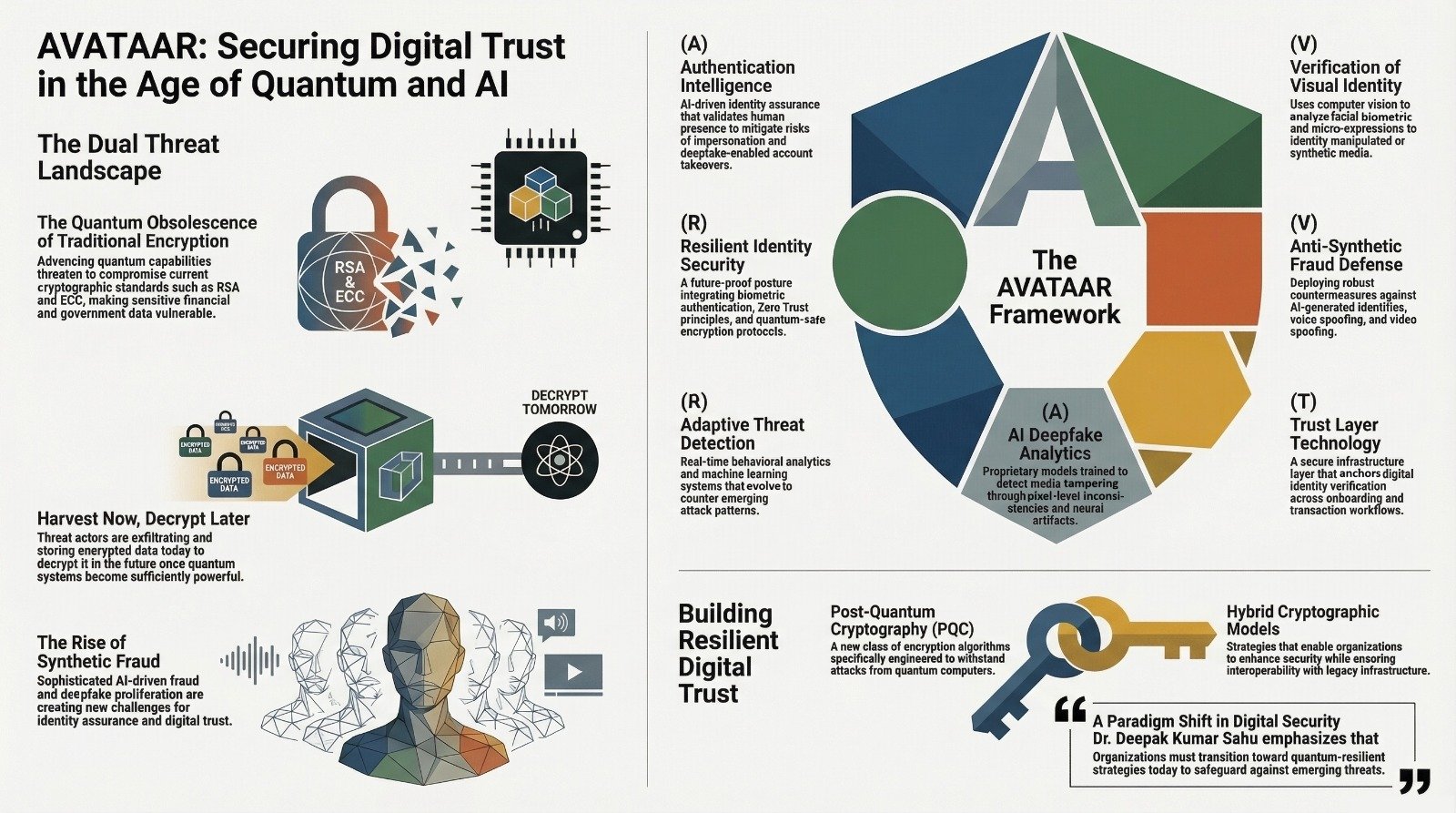
The rise of deepfakes and synthetic media also underscores the urgency of regulatory clarity. As amendments targeting synthetically generated information take shape, India’s push for sovereign compute capacity becomes not just strategic, but essential for digital autonomy.
Ultimately, the Delhi summit reframes AI as a human development project. By focusing on inclusion, skilling and augmentation rather than displacement, India is presenting AI as an engine of broad-based growth. With Modi at the helm, the event projects a confident narrative: the Global South is no longer an observer in the AI revolution—it is shaping its direction.