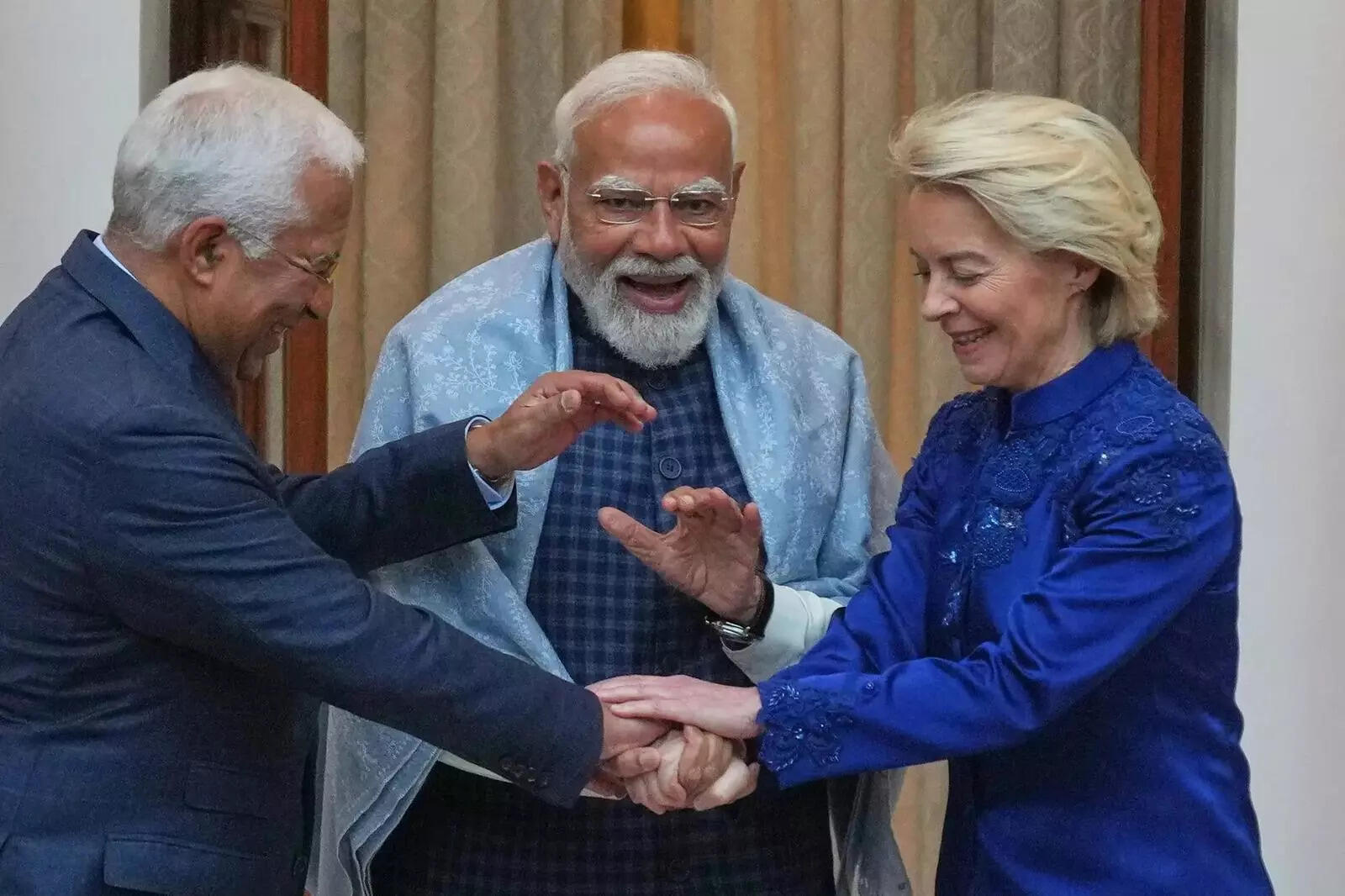
The signing of the India–EU Free Trade Agreement marks a major geopolitical and economic milestone, reflecting the decisive leadership and strategic vision of Prime Minister Shri Narendra Modi and the European Union’s political leadership. At a time when the global economic order is being reshaped by supply-chain realignments, fragmentation, and technology-led competition, the agreement sends a clear signal of trust, stability, and long-term strategic commitment between India and Europe.
Beyond tariff reductions, the FTA highlights a deeper alignment of priorities, particularly in digital infrastructure, secure connectivity, space cooperation, and next-generation networks. These domains are increasingly critical to economic resilience and strategic autonomy. The agreement provides a structured platform for European investors to engage with India’s fast-growing digital economy, positioning India not only as a large market but also as a global innovation and scaling hub.
Importantly, the partnership is not one-directional. The FTA opens new avenues for Indian enterprises to expand into Europe. Indian companies, including leading digital infrastructure and telecom players such as Airtel, are well placed to invest in Europe’s evolving connectivity, cloud, and digital services ecosystem, bringing capital, technology, and operational expertise.
From a broader perspective, the India–EU FTA reinforces a shift toward trusted economic partnerships grounded in shared values, regulatory alignment, and long-term collaboration rather than transactional trade. It strengthens the foundation for co-creation in critical technologies while enhancing economic resilience on both sides.
Overall, the agreement marks a turning point in India–EU relations—aligning economic growth with strategic cooperation and setting the stage for a more integrated, future-ready partnership.