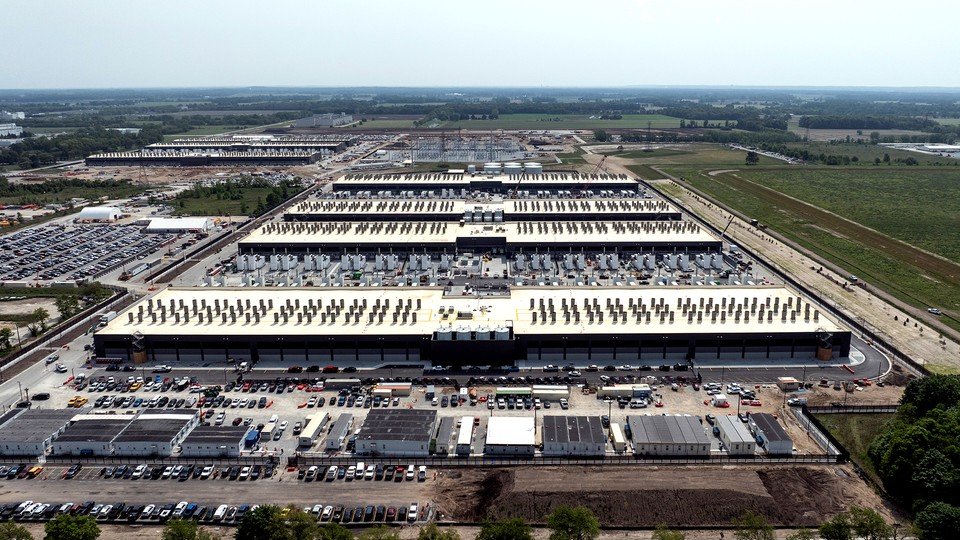
AI hyperscalers, after investing billions into massive compute buildouts, are now confronting a new and potentially destabilising threat: ultra-fast GPU depreciation. As AI chip innovation accelerates at an unprecedented pace, each new generation delivers dramatic leaps in speed and energy efficiency—far outpacing the economic lifecycle of today’s hardware.
In traditional enterprise environments, servers remain useful for three to five years without undermining profitability. But AI factories operate under a radically different equation. Their competitiveness depends directly on the latest compute performance. Falling even one GPU generation behind can cripple margins, as older hardware consumes more power, delivers slower throughput, and becomes significantly less attractive for high-volume AI workloads.
The generational leaps in AI silicon are extreme: 40–80% performance gains and 20–40% efficiency improvements are becoming the norm. Such advances can render last-generation clusters economically obsolete almost instantly—not because they stop functioning, but because they can no longer compete with faster, cheaper-to-run next-gen deployments.
This creates a vicious cycle. Hyperscalers must keep reinvesting billions to maintain competitive parity, yet the hardware they buy depreciates faster than their ability to recoup value. The industry has never seen upgrade pressure this intense.
If GPU innovation continues at its current breakneck speed, hyperscalers may face a cashflow and depreciation shock unlike anything in modern computing history—potentially becoming the next major crisis in the AI infrastructure race.