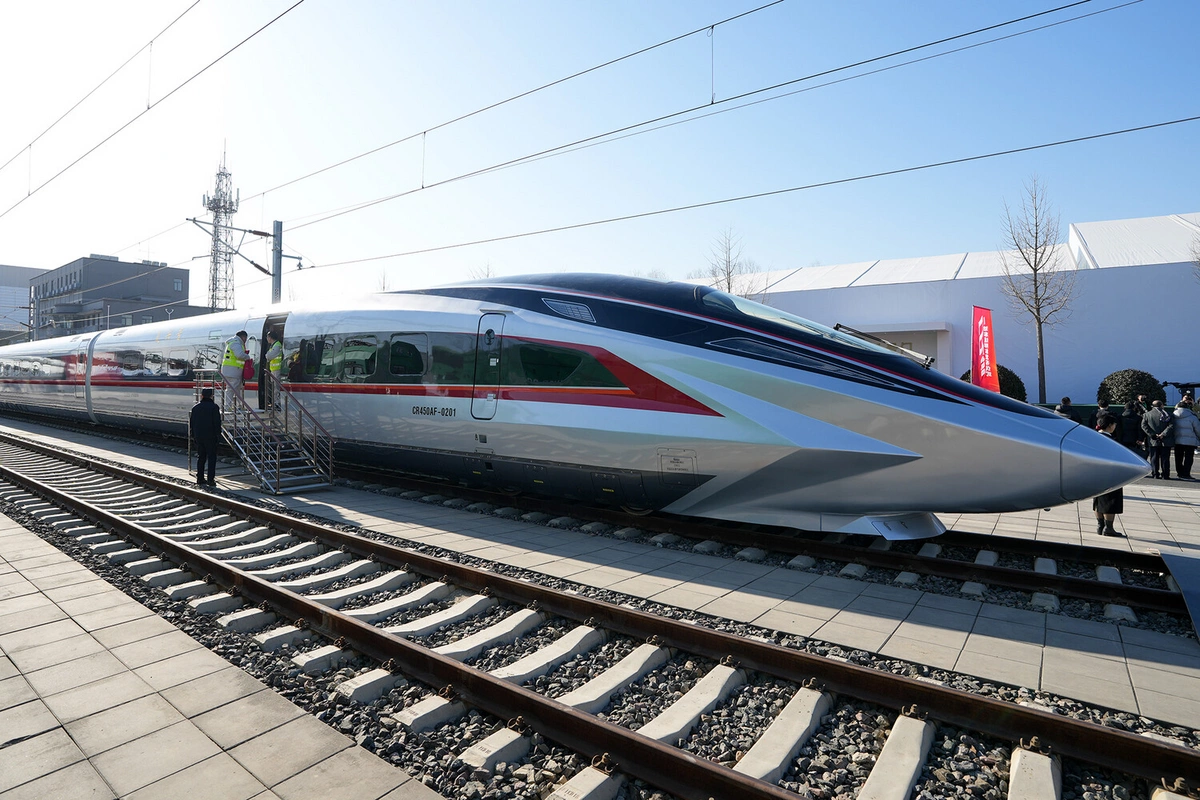
China has achieved a major breakthrough in high-speed transportation technology after successfully accelerating a test vehicle to 700 km/h in just two seconds during a magnetic levitation (maglev) experiment. The test marks a significant step toward next-generation ground transport systems that could rival air travel in speed while remaining energy efficient.
The experiment was conducted on a short test track using electromagnetic propulsion and magnetic levitation, eliminating wheel-to-track friction. By suspending the vehicle above the track and using powerful electromagnetic forces for acceleration, engineers were able to achieve extreme speeds over very short distances—something impossible with conventional rail systems.
Researchers involved in the project said the test was designed to validate key technologies, including rapid acceleration control, stability at ultra-high speeds, and precise braking systems. While the vehicle only traveled a limited distance, the results demonstrate the feasibility of future transport systems capable of dramatically reducing intercity travel times.
Experts say such technology could eventually enable passenger or cargo transport exceeding 1,000 km/h in controlled environments such as evacuated or low-pressure tubes. Beyond transportation, the research also has applications in aerospace testing, advanced physics experiments, and next-generation launch systems.
China has invested heavily in maglev and high-speed rail as part of its long-term infrastructure and technology strategy. The latest test reinforces the country’s ambition to lead in futuristic mobility solutions, signaling a future where ground transport could approach the speed of aircraft while offering greater efficiency and lower emissions.