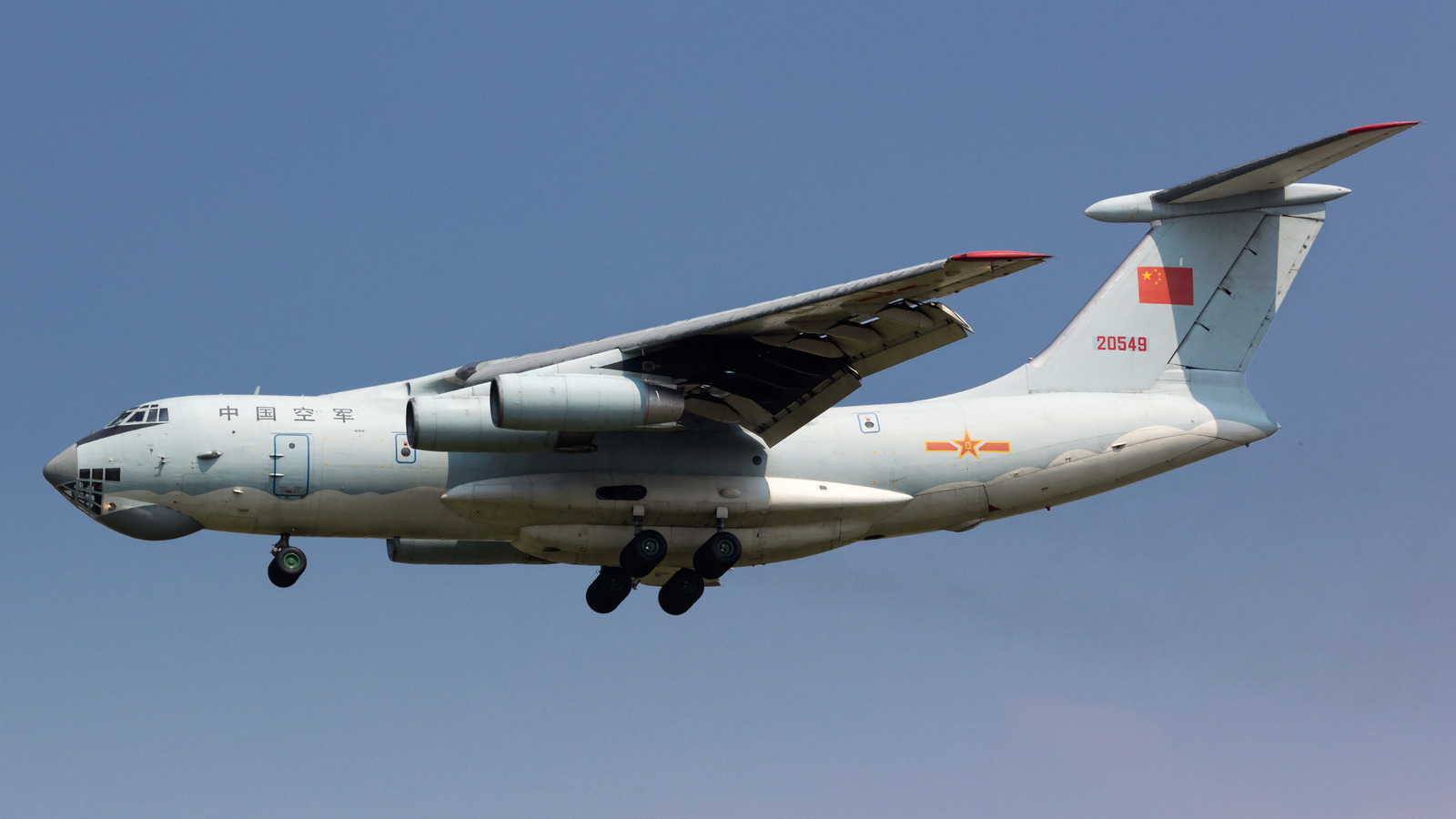
A new strategic assessment warns that China’s rapid expansion of airpower has fundamentally reshaped the military balance in the Indo-Pacific, eroding long-held assumptions of U.S. and allied air superiority. The findings are detailed in The Evolution of Russian and Chinese Air Power Threats by Justin Bronk, which examines how Russian and Chinese air capabilities have evolved since 2020.
The report concludes that while Russia remains a serious and increasingly capable airpower threat in Europe—hardened by combat experience in Ukraine—China presents a deeper, more systemic challenge. Beijing’s integrated growth across air, missile, sensor, and networked warfare capabilities has already constrained U.S. freedom of action in and around the First Island Chain, including Taiwan, Japan, and surrounding waters.
Since 2020, the People’s Liberation Army Air Force and the People’s Liberation Army Navy Air Force have expanded advanced fourth- and fifth-generation fighter fleets at exceptional speed. By late 2025, China is assessed to field between 320 and 350 J-20 stealth fighters, with production approaching 120 aircraft annually, alongside roughly 450 J-16 multirole fighters. These platforms are equipped with long-range air-to-air missiles that significantly outrange Western equivalents.
This fighter expansion is reinforced by a dense network of enablers: around 50 KJ-500 airborne early warning and control aircraft, advanced electronic warfare platforms, and a rapidly growing satellite-based ISR architecture. Integrated with ground-based and maritime air-defence systems, these capabilities form long-range “kill chains” capable of threatening tankers, carrier strike groups, and forward air bases at distances exceeding 1,000 km.
The report concludes that Western aircraft operating within the First Island Chain would face contested airspace and stretched logistical and electromagnetic support. Bronk urges planners to abandon assumptions of guaranteed air superiority and instead prepare for limited, temporary windows of control—signalling a fundamental shift in the character of modern air warfare.