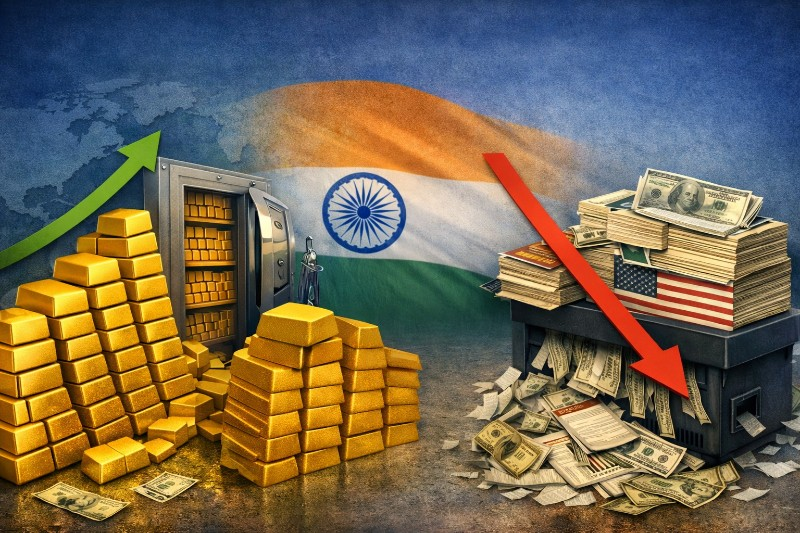
Recent reports of a meeting between the U.S. envoy and the leadership of the Reserve Bank of India have drawn attention because they coincided with a noticeable shift in India’s foreign-exchange strategy. Over the past year, New Delhi reduced its exposure to United States Treasury securities by more than $50 billion, marking the first annual decline in several years.
For decades, Treasuries have been treated as the world’s benchmark safe asset. Central banks stored reserves there, global banks used them as collateral, and financial markets relied on their liquidity and predictability.
But the environment has changed. U.S. public debt has climbed sharply, interest-rate cycles have become more volatile, and bond prices have fluctuated. Returns remain attractive, yet the aura of unquestioned safety is fading.
Another lesson came from sanctions episodes in recent years. The ability to freeze assets or restrict payment channels reminded many governments that reserves can carry political risk alongside financial risk.
India’s response has been diversification, not rupture. Gold purchases have risen steadily, pushing holdings to multi-decade highs and increasing the metal’s share of total reserves. The move reflects a preference for assets free from default or sanctions exposure.
At the same time, the dollar remains central to global trade and finance. Liquidity, depth, and institutional trust still give the U.S. currency unmatched advantages.
What is emerging is a hedging mindset. Through forums such as BRICS, countries are exploring local-currency settlement and alternative rails while maintaining links to existing systems.
The message is pragmatic: reduce concentration risk, widen options, and prepare for a more fragmented financial order.