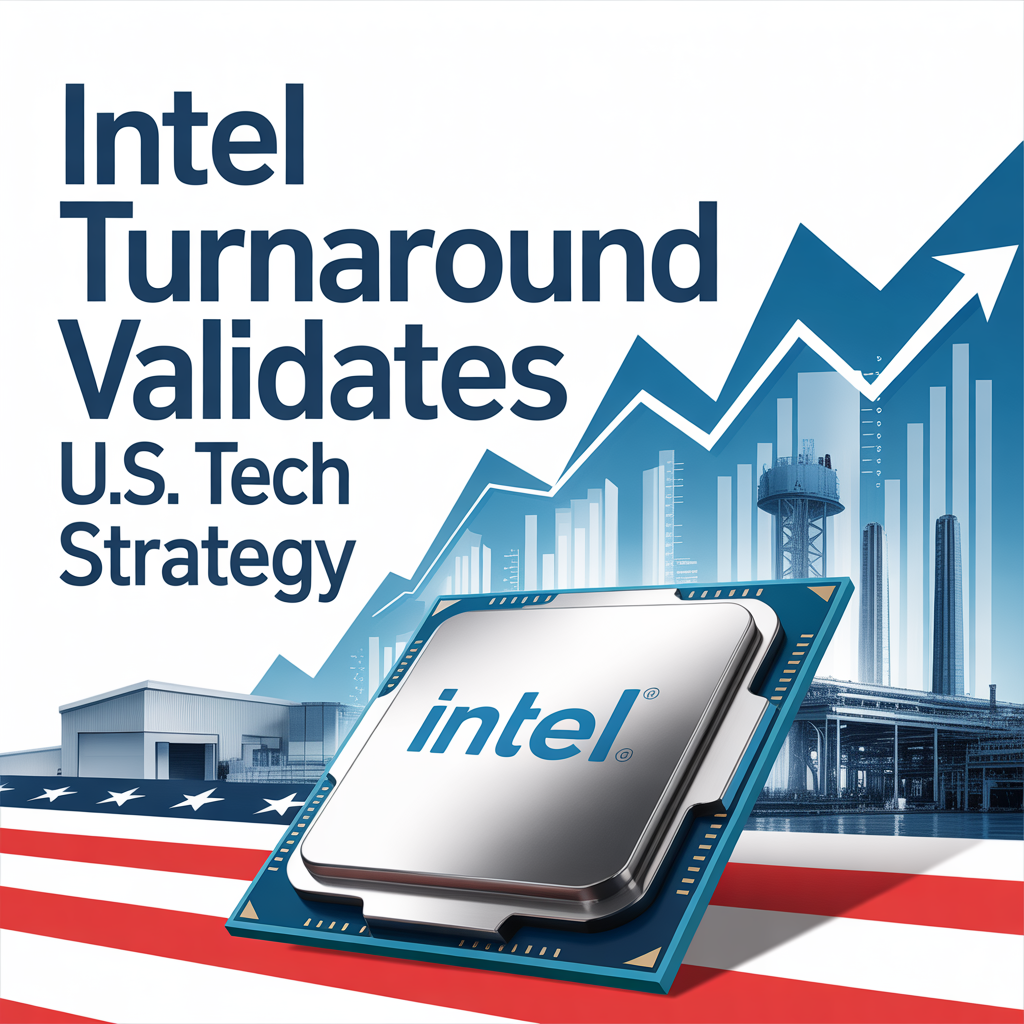
Intel’s comeback is shaping up to be a powerful validation of aggressive U.S. industrial policy and public-private investment. The company’s strong Q3 results—$13.7 billion in revenue and $0.23 per share in profit—signal a meaningful turning point in its multiyear transformation and offer early evidence that government-backed strategies can yield both economic and strategic benefits.
Once the global leader in chipmaking, Intel lost ground in recent years to competitors like AMD and Nvidia, particularly in performance and AI hardware. But CEO Lip-Bu Tan’s restructuring plan has reoriented the company, focusing resources on fast-growing sectors like AI, data centers, and edge computing.
This turnaround has been fueled by unprecedented capital support. The U.S. government’s 10% equity stake, part of former President Trump’s semiconductor self-reliance strategy, has been bolstered by major private-sector investments from Nvidia and SoftBank. This mix of capital has enabled Intel to accelerate product development and build domestic infrastructure like the Hyperion Data Center.
Investor sentiment has followed. Intel’s stock has surged to $38.16, nearly doubling since August—its strongest rally in nearly a decade. Analysts attribute the momentum to improved cost control, product clarity, and strategic alignment with national policy goals.
The 10% government stake is more than symbolic; it marks a shift toward direct participation in critical tech sectors. This mirrors policies in China, South Korea, and Europe, where governments actively support domestic champions in key industries.
Intel’s success so far also suggests that industrial policy and private innovation can co-exist. Strategic funding gave Intel the space to restructure boldly without alienating investors wary of long-term R&D timelines.
Still, challenges remain. Intel must compete against Nvidia’s AI chip dominance and AMD’s agile architectures. Execution will be key in a rapidly evolving AI market.
Looking ahead, Intel’s trajectory now positions it not just to recover, but to lead. If sustained, its success could become a model for America’s tech revival—rooted in collaboration, vision, and strategic investment.