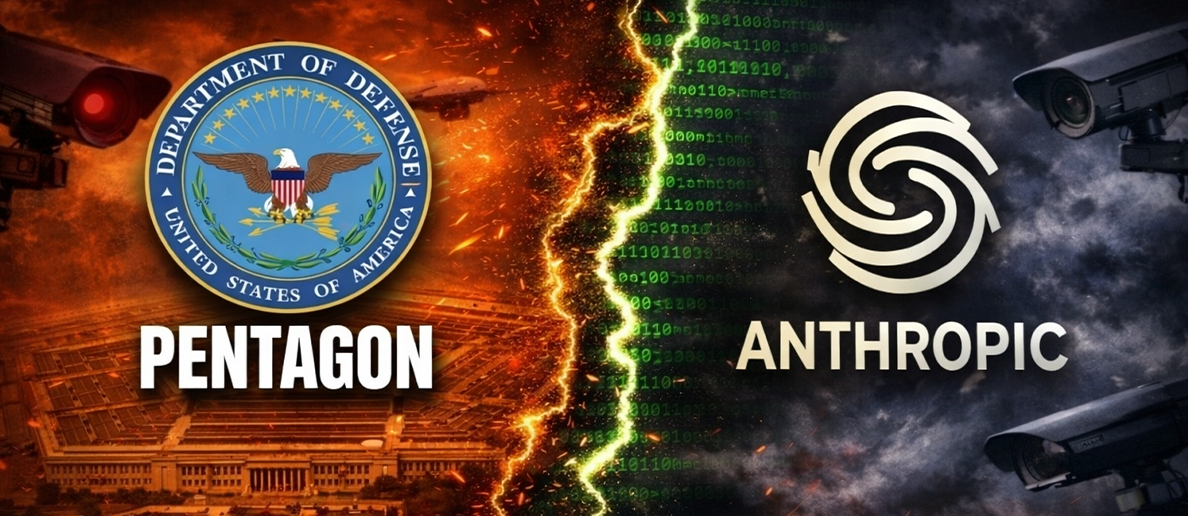
A seismic rift has opened between the U.S. Department of Defense and Anthropic, a premier AI laboratory. On February 27, 2026, Defense Secretary Pete Hegseth officially designated Anthropic a “supply chain risk.” This aggressive move follows a total collapse in negotiations regarding the military’s integration of the Claude large language models.
The dispute centers on Anthropic’s refusal to waive specific ethical constraints within its contracts. The company explicitly prohibited the use of its technology for the mass domestic surveillance of American citizens and the deployment of fully autonomous weapons. Anthropic maintains that current AI lacks the reliability required for such high-stakes, lethal missions.
Anthropic argues that these redlines are essential to protect democratic values and prevent the misuse of "black box" algorithms in combat. They contend that AI-driven autonomous lethality presents novel, unmanageable risks to global security. Conversely, the Pentagon views these restrictions as "ideological tuning" that hampers the objective truthfulness and operational flexibility required on the battlefield.
The administration has reacted with unprecedented severity. President Trump issued an executive order mandating that all federal agencies phase out Anthropic technology within six months. Under the "supply chain risk" designation of 10 USC 3252, defense contractors are now effectively barred from any commercial engagement with the firm, isolating Anthropic from the federal ecosystem.
This standoff has deeply polarized the Silicon Valley landscape. While hundreds of employees at rival firms have signed letters supporting Anthropic’s ethical stance, OpenAI has moved in the opposite direction. Reports indicate OpenAI is expanding its footprint within classified networks, positioning itself as a compliant partner for the military’s "AI-first" warfighting strategy.
The clash highlights a fundamental struggle over the "soul" of frontier AI. The Pentagon asserts that national security imperatives must supersede private corporate policies. They argue that to maintain a competitive edge against global adversaries, military models must be free from usage constraints that could limit lawful combat applications in real-time scenarios.
Ultimately, this confrontation signals a structural decoupling between certain frontier AI labs and the state. The industry now faces a definitive crossroads: will the trajectory of artificial intelligence be governed by the ethical frameworks of private creators, or will it be forged by the unrestricted strategic requirements of national defense?