
Replacing RFID-Based ID Card Checks with FaceOff Trusted Encrypted QR Codes
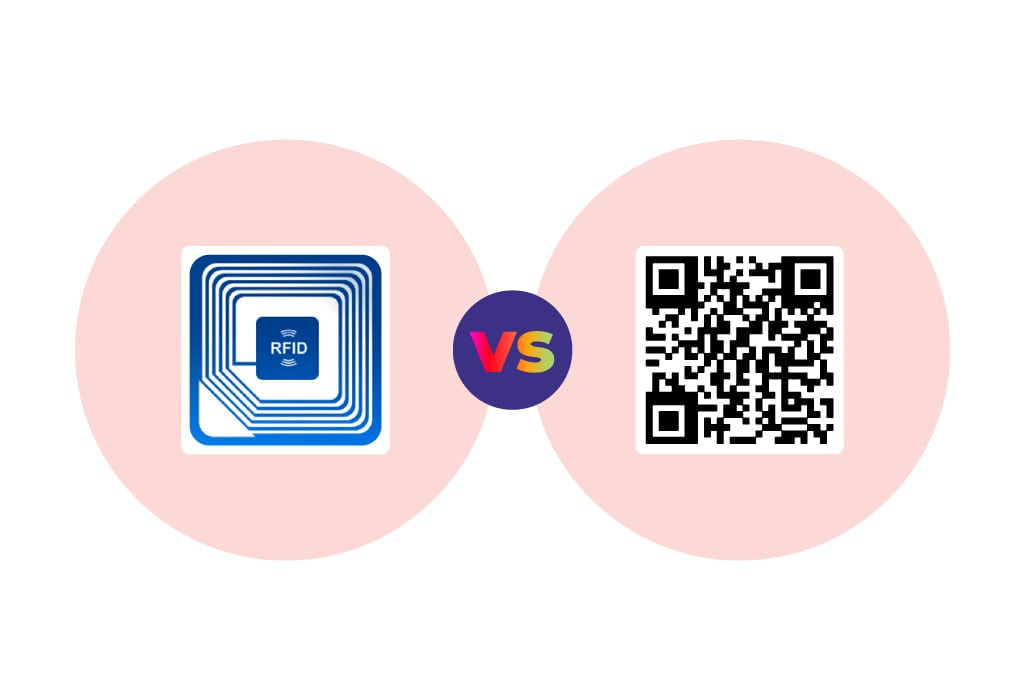
Classical RFID based ID card systems have been widely used for access control, staff identification and visitor registration. However, just as bad guys get smarter and more creative, common RFID solutions can lead organizations down a path of relying on devices that can be cloned, skimmed, spoofed in relay attacks with low auditability and suspect crypto– or worse yet – no cryptographic security to speak of. FaceOff Trusted Encrypted QR Code technology provides a next-generation, cryptographically verifiable option that supplants RFID cards and raises identity assurance to zero trust, compliance-compatible levels.
Inherent Drawbacks of RFID-Based ID Card Systems
RFID cards are a form of “passive radio-frequency” communication, where the card is able to respond to any compatible reader reaching it. This creates multiple attack surfaces. RFID tags are one of the most popular examples in which (e.g.) you can skim them without physical contact, clone their content by means of low cost hardware and replay it by mean of relaying attacks. Many RFID systems use to store fixed, weakly protected data as well, these systems make revocation, fine-grained access control or the tracing into tracking system very challenging. Moreover, current RFID infrastructures lack powerful cryptographic non-repudiation; it is also hard to determine whether a card was genuinely presented or has been cloned.
FaceOff QR as Cryptographic Identity Not Visual Code
FaceOff Trusted QR completely flips the equation by turning the ubiquitous QR code into a cryptographically sealed identity token and not just a data container. One entity’s QR code contains encrypted identity attributes signed by RSA-2048 with SHA-256 and anchored to keys in a FIPS 140-2 certified Hardware Security Module (HSM). Also, what is different, even if someone who is unauthorized tries to copy or recreate a forged QR code, when signature-first verification checks the QR code right away at the time of scanning and reading it automatically?
The Risk of Cloning and Skimming Are Eliminated
Card cloning is one of the most serious drawbacks in RFID-based systems. FaceOff QR code imaging, physically or photographically reproduced is meaningless to the cloned. The QR itself includes a cryptographically-signed nonce, integrity hash and signature which can be verified on the fly. A mirrored QR image immediately fails validation if it is passed through the scan limit, used beyond a validity period or presented from an inappropriate context. This renders FaceOff QR intrinsically immune to skimming, replay, as well as relay attacks that are not preventable at the level of RFID.
Device-Locked Trust vs. Open RFID Readers
RFID readers are often replaceable and challenging to manage at large. FaceOff presents a rigorous authorized-device model, in which QR code verification is only allowed with registered scanners and unique cryptographic identity and valid certificate SecureQR_Features. Each scanner receives a certificate signed by the FaceOff system CA, which can be revoked at any time, and is fully auditable. This guarantees that who is verifying the identity (not just what) matters, a property which RFID deployments lack.
Real-Time Revocation and Policy Enforcement
RFID cards, in many cases are valid until dervived or manually blacklisted. In contrast, we present FaceOff QR codes that can be revoked on-the-fly as well as exploit configurable expiration and scan-count. In case an employee leaves an organization, a visitor misplaces the card they were provided, or if for whatever reason it is suspected that a QR was used or lost by someone unauthorized, the QR can be revoked instantly in our backend. Any later scan will result in a definitely REJECTED status and thus no remaining access risk is left—something that cannot be granted with RFID systems without swapping the physical card.
Full Auditability and Compliance-Grade Traceability
Most RFID systems do not possess indelible logs and forensic level traceability. FaceOff Secure QR—A new cryptographically chained audit trail with tamper detection and long term retention of every issuance (tagging) and verification action (proving) make up the backbone of this blockchain style solution to digitizing your assets securely Add extracted from FaceOff. That allows organizations to comply with regulatory, contractual and internal governance at the same time as they are able to facilitate rights like data portability and erasure through cryptographic anonymization—features that no normal RFID system can deliver.
The problem that swapping is typically associated with special readers, wiring and card personalization hardware for RFID infrastructures. FaceOff QR eliminates the friction of deployment using off-the-shelf cameras, web interfaces, mobile phones and APIs for verification. QR issuance time is under 2 seconds and verification time is under 1 second, which ensures operational speed as well as security Not secure and fast without registration. This enables enterprises to update the process of verifying an identity without large scale physical retro-fit.
From Trust Establishment Based on Physical Proximity to Cryptographic Zero Trust
At the heart of RFID is the trust of proximity— if the card answers, let them in. FaceOff Trusted QR is based on cryptographic zero trust in the sense that authorization is provided only after signature verification, integrity checking, device authentication and policy assessment. This transition harmonizes identity verification with contemporary zero-trust security designs, and demonstrates that FaceOff QR isn’t just a replacement for RFID, but is instead a future-proof identity control layer.
Conclusion: It’s a Strategic Upgrade, Not a Cosmetic Exchange
The switch from RFID ID cards to FaceOff Trusted Encrypted QR codes is not just a matter of different mediums – it is a defensive security move. Through the infusion of military-grade cryptography, HSM-backed key protection, device-bound trust, real-time revocation and compliance-grade auditability – all wrapped up in what is effectively a transponder on a chip. FaceOff QR removes the architectural vulnerabilities intrinsic to RFID systems and offers greater operational flexibility. For the companies looking for secure, scalable and regulation-compliant identify verification, FaceOff QR is the logical evolution of RFID.