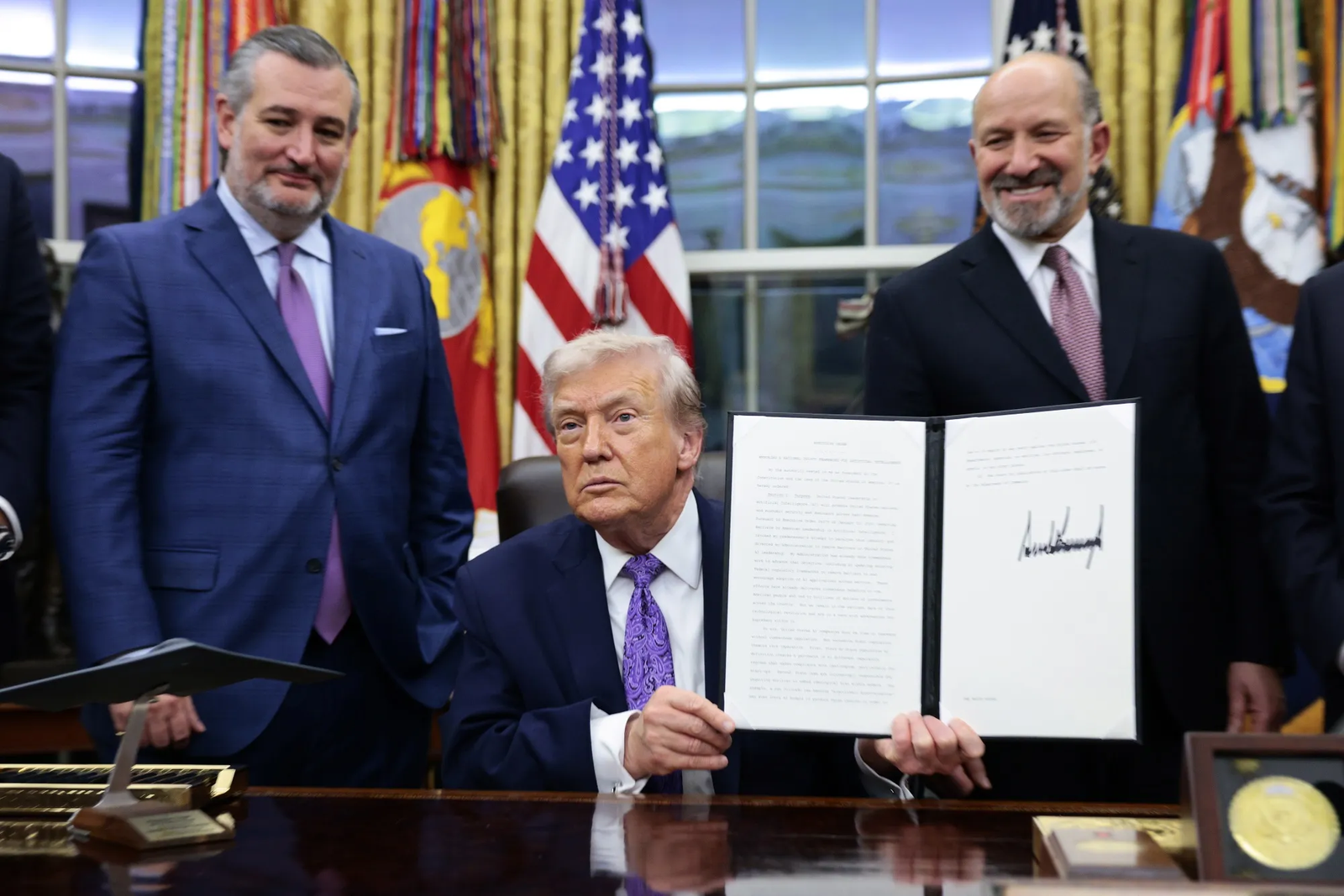
US President Donald Trump has signed an executive order aimed at blocking states from enforcing their own artificial intelligence regulations, pushing instead for a single national framework to govern AI development. The move reflects the administration’s belief that fragmented state-level rules could slow innovation and weaken America’s position in the global AI race.
Explaining the order at the White House, aide Will Scharf said it directs federal agencies to take decisive action to prevent what the administration views as “onerous and excessive” state regulations that could cripple the AI industry. The executive order gives the federal government tools to challenge such laws while a broader national framework is developed.
White House AI and crypto czar David Sacks said the administration will work with Congress to create a comprehensive federal AI framework. He clarified that the order does not seek to override all state laws, particularly those related to child safety, and will not automatically challenge every state-level AI regulation.
The order comes after Congress rejected earlier Republican efforts to impose a moratorium on state AI laws. Lawmakers removed a proposed 10-year ban on state enforcement from a major domestic policy bill and declined to include it in the National Defense Authorization Act.
Tech leaders, including Sam Altman, have warned that a patchwork of state rules could hamper innovation and hurt US competitiveness against China. Critics, however, fear deregulation could weaken accountability as AI spreads into healthcare, policing, and daily life.
Legal experts expect court challenges, while policy groups argue Congress must act quickly to fill the regulatory vacuum with clear national standards.